Kisima Farm; A Reminder on why we Shouldn’t Fragment our Land

Last week, on my way from Meru to Nanyuki, I drove past one expansive farmland in Timau. I would later learn that the name of the farm is Kisima Farm. The road which cuts through the farm is a relatively long drive and allows one to peek into the various aspects of the farm.
The mixed farm, which does wheat farming, potatoes, flowers, timber, and forestry among other things, was founded in 1919 and incorporated in 1943. The farm land, now 100% Kenyan-owned, presents critical lessons which ought to have been learned in advance.
Lesson number one has everything to do with land fragmentation. Land fragmentation refers to the concept of farmers dividing and operating two or more geographically separated tracts of land, kept apart by relatively small distances, for farming purposes.

The irregularity of the land and the size and dispersion of those tracts of land present a myriad of challenges. It becomes impossible to mechanise the lands, limits the scale of large-scale farming, limits the number of crops or types of farming to be practised, and increases the cost (becomes expensive) of running and managing such a farm.
Perhaps, one of the greatest challenges with land fragmentation in Kenya has been pointed to our inheritance laws. For instance, where I come from, whatever small land I will have, I will be expected to subdivide it among my children, the way my father and grandfathers did to us.
Three generations from now, if my children have to inherit any piece of land, it will be their graveyards only. Arable and fertile lands have been recklessly subdivided, poorly farmed, and exploited until productivity is at its lowest in decades.
This poses a great danger to our efforts to ensure food security. The Kisima continues to do its farming sustainably without the effects of unmonitored fragmentation. From the founder, Will Powys, the land was managed by the second generation, and now that it is in what I can call the third generation, the farm still remains true to its cause.
Kisima farm produces wheat and barley as its primary crops. They practice a rotational system of farming whereby they interchange wheat, barley, peas, canola, and potatoes. This sees the farm churn out over 15,000 metric tonnes of arable crops every year.
The Kisima farm, in keeping with a whole value addition chain system, produces its own stone ground whole meal wheat flour, which they then sell to retail outlets together with their canola oil. As they adopt new technologies such as precision agriculture, the prospects for the farm are growing even more.
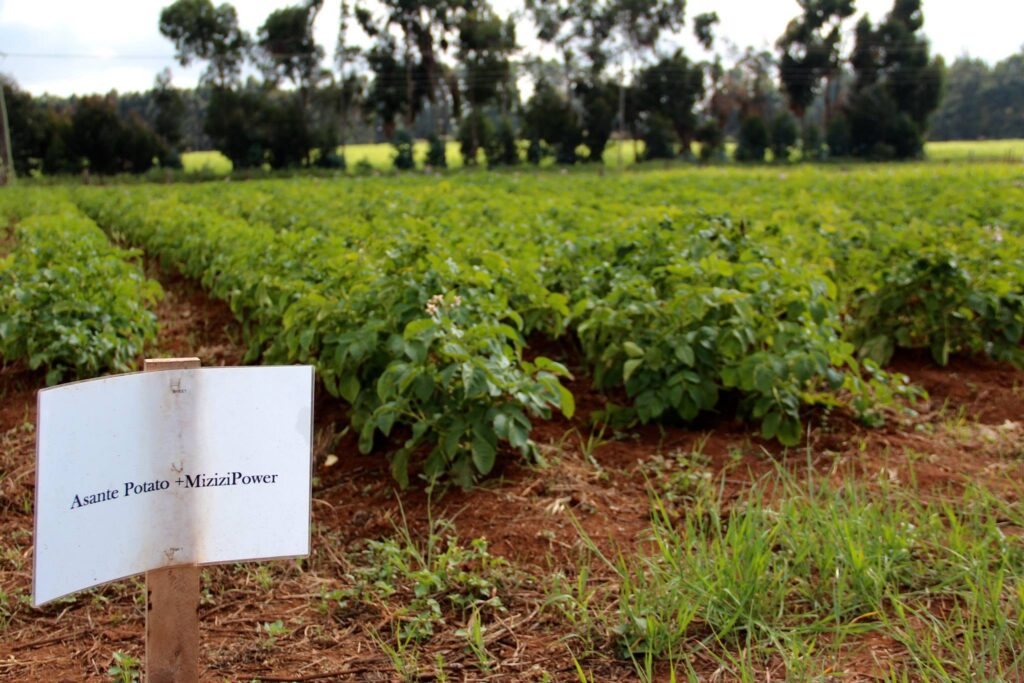
The farm also produces 3000 tonnes of certified seed potatoes that they supply to over 4000 smallholder farmers each year. Potatoes make up an important part of the Kenyan meal, with potato chips/fries topping the list of fast food joints (to order their seeds, kindly reach out to them on +254 716 968 766.)
Kisima Farm is also into floriculture and forestry. The roses from the farm are competitively making it big in the international markets. With a good climate favouring the growth of large-headed premium roses, their floriculture land now totals over 18.5 ha of land.
They also maintain a forest estate that comprises Pinus radiate, Pinus patula, Cupressus lusitanica, and Eucalyptus. Additionally, they operate two sawmills producing over 85000 running meters of timber annually. This finds its way into various purposes across the application sphere, from finding its way into the interior design of buildings, making of school desks, poles, to packaging in potato boxes (for orders on timber and allied products, you can reach out to them on forestry@kisima.co.ke.)

We have a long way to go in ensuring that we become food sufficient. To do this, we need to learn some lessons from such enterprises as Kisima Farm. We need to combine technology, especially irrigation and precision agriculture, and conservation agriculture, to ensure we maintain and increase what we are producing.
We then need to rethink our land policies to ensure we minimise land fragmentation if we are to do any serious farming, one that is aimed at ensuring our food security. Otherwise, we will cry foul every year about hunger in such a rich country as ours. Ultimately, the choice is ours.