Beyond Fanon: Why Africa Must Stop Blaming Colonialism Alone
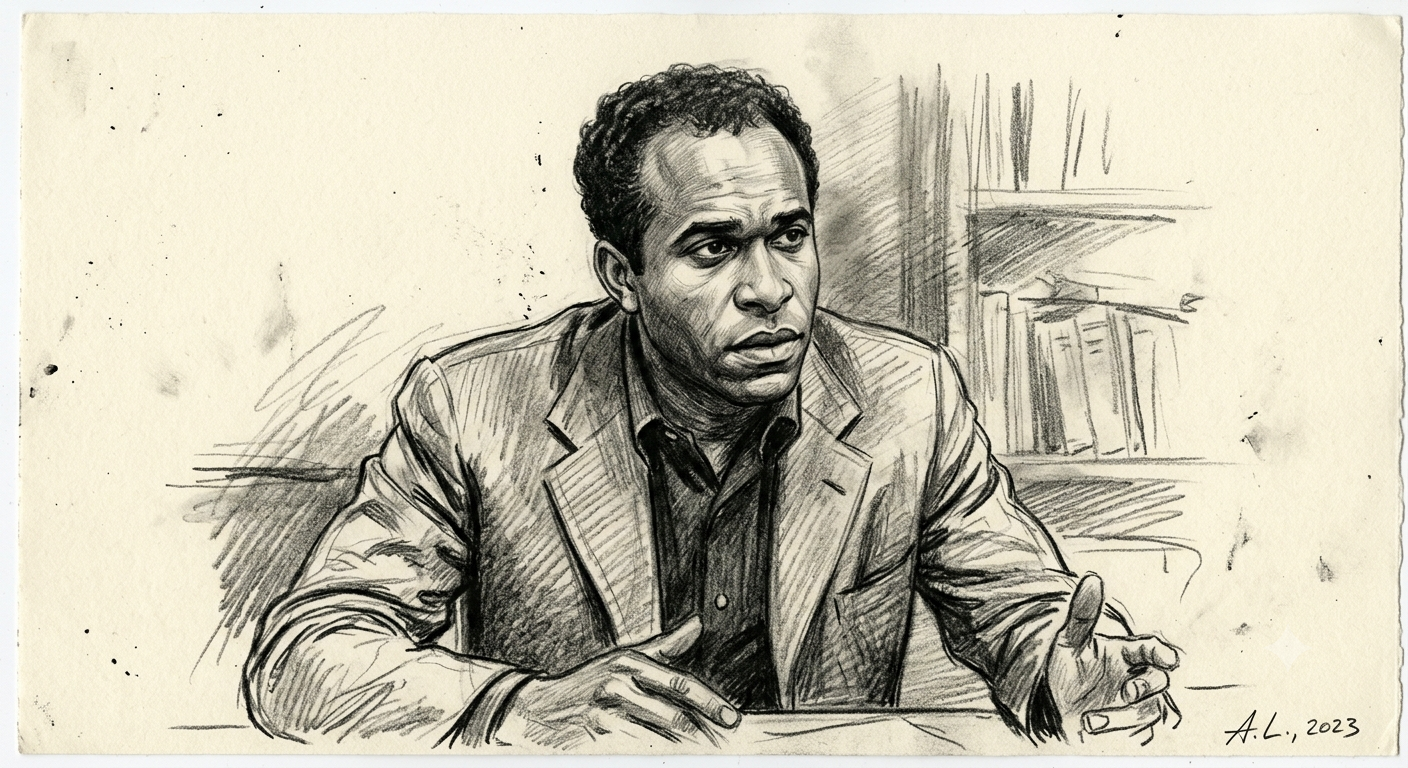
Frantz Fanon once said, “O my body, make of me always a man who questions!” He refused to accept colonial myths and any form of injustice, more so racial injustice. It is on Fanon and colonialism that Africa’s story of political and economic struggles has often begun and ended. The catch? We have accepted that colonialism will always be our key enemy. But which type, though?
The European imperial powers came and carved arbitrary borders, extracted natural resources, disrupted indigenous institutions, and left behind weak states. This settler and exploitative colonialism was designed for exploitation and oppression rather than development. These are historical facts that are beyond serious dispute.
Colonialism inflicted profound political, economic, and psychological damage whose effects continue to reverberate across the continent. This history is indispensable, but we must agree that it cannot be our permanent alibi for our slow progress.
We cannot, and should never, argue that colonialism alone adequately explains Africa’s present condition. An insistence on colonialism as the only source of our misfortune long after we reclaimed self-rule and independence is to deny ourselves the very agency and pertinence of the struggle. If we possess the capacity to govern ourselves, we must also possess the courage to examine our own failures.
To examine our failures, within and outside the context of imperial colonialism, is to embody the inquisitive principle of Fanon’s philosophy, deep into African colonialism.
Frantz Fanon
Frantz Fanon arguably remains one of the twentieth century’s most penetrating analysts of colonial domination. In The Wretched of the Earth, he exposed the psychological violence of empire and warned that political independence without structural transformation would merely reproduce colonial systems under African management.
He feared the rise of a national bourgeoisie more interested in replacing colonial administrators than in dismantling the institutions of extraction they inherited. This loosely points to the birth of internal colonialism. And history has vindicated much of his warning.
Across many African states, independence transferred political authority but often left the architecture of centralised power intact. Colonial governors disappeared, yet excessively centralised presidencies remained. Foreign administrators departed, but then bureaucracies continued to serve political elites more readily than ordinary citizens. Like I said a few weeks ago, the age of “more and less” African dawned.
Fanon understood the danger and severity of such a development. However, he never intended colonialism to become an eternal explanation for every subsequent failure of the continent. Ironically, some of his admirers transformed his critique into a perpetual theory of victimhood. Colonialism, then, has become, in some political discourse, an answer to almost every question. From corruption to electoral violence, institutional decay to failing schools, collapsing hospitals to youth unemployment, and even constitutional abuse.
We deserve a better argument now. To understand where this is coming from, let us look at some simple cases.
For example, Germany cannot ignore Nazism and its effects in the last century. China cannot forget the Century of Humiliation that lasted from about 1839 to 1949. India continues to wrestle with colonial legacies. Latin America still lives with the consequences of conquest and dictatorship. In other words, no nation escapes the influence of its past. Yet none of the societies mentioned here continuously blame every contemporary failure on historical injustice alone or indefinite excuses.
On Fanon’s Foundation, but Stepping Beyond
More than sixty years after independence, many of our African nations must increasingly shift responsibility toward those who have exercised, and continue to exercise, sovereign authority over our affairs. Today, when a minister steals public funds, a judge sells justice, or a president suppresses dissent, manipulates elections, weakens institutions, or ignores constitutional limits, it is not because of colonialism. These are based on present choices.
Colonialism does not compel contemporary corruption, nor does it require leaders to personalise the state. It does not promote conversion of public institutions into instruments of patronage, or encourage ethnic polarisation for electoral advantage. These are political decisions made by Africans governing African states. By individuals occupying specific positions.
One of the greatest obstacles to our development is the culture of externalising responsibility. When we habitually attribute our failure to ‘outside forces’, imaginary, we gradually weaken our own capacity for self-correction. That way, we completely kill our own accountability.

Nobel laureate Amartya Sen has argued that development is fundamentally the expansion of human freedoms and capabilities. That expansion requires institutions capable of self-criticism, public reasoning, and democratic accountability. No society develops merely by identifying external enemies. It develops by cultivating internal excellence. This is where our continent, Africa, perhaps faces its most philosophical challenge.
A lot of political discourse across the continent has often devoted extraordinary energy to condemning colonial history. Very little attention is given to examining present governance.
The rhetoric of liberation remains powerful; that is why we talk of Mau Mau, FRELIMO and other nationalist movements of the independence period. But liberation itself cannot remain permanently backwards-looking. We must be forward-looking.
The generation that fought for political independence fulfilled their historic responsibility. The present generation must fulfil another. Public institutions need strengthening, our governance must attain excellence, and we must take accountability seriously. We must build states that deserve the sacrifices made by those who secured independence.
More than honest presidents, Africa needs institutions capable of constraining dishonest ones. After all, most leaders are rarely virtuous. We must build upon constitutional arrangements that limit power, enforce transparency, and punish abuse regardless of who occupies public office.
Independent courts must be in place because good leaders eventually leave office. Professional civil services matter because elections should not determine administrative competence. Free media must be allowed because governments rarely expose their own failures voluntarily.
Universities must churn out graduates able to question themselves; otherwise, we risk becoming vulnerable to intellectual stagnation, assuming we have not already. Citizens must also understand and take their role seriously.
Too often, we expect extraordinary leadership while practising ordinary citizenship. We talk of democracy and forget that we are the democracy. We trade votes for temporary favours, simple seasonal handouts. Ethnic and tribal solidarity overrides national interest. We defend public resources only when they benefit us or one of us. The latter sounds suicidal. We condemn corruption in opponents but excuse it with our allies.
Africa is, Because We Are
Unfortunately, no political system can consistently outperform the civic culture that sustains it. Thus, Africa is, because we are. That is how critical people are in determining the destiny of their nations. Not colonialism. Fanon pointed it out; we ought to do something about it.
Democracy is not simply an electoral mechanism. It is a moral discipline requiring citizens to defend principles even when doing so disadvantages those we support politically. Constitutionalism means accepting limits upon power regardless of who exercises it. Accountability means applying one standard to friends and opponents alike. No two-way.
The philosopher Karl Popper argued that the essential political question is not, “Who should rule?” but rather, “How can institutions prevent bad rulers from causing too much harm?” We must construct resilient institutions; institutions that endure.
Our continent’s future depends less upon discovering exceptional personalities than upon establishing ordinary systems that function exceptionally well. Something that requires us to reimagine our politics.
We must move from liberation politics to governance politics. We must seek to attain institutional excellence and constitutional authority. We must create knowledge. We must be innovative. We must produce ideas that create value from the minerals we have. We must evolve to the decolonised African that Fanon must have envisioned.
Let me reiterate once again that our greatest possession is human capital. Our youthful population, expanding technological capacity, entrepreneurial energy, cultural creativity, and strategic geography constitute advantages few continents enjoy in one mix. This is our time, folks.
We have potential. Now is the time to convert that potential into prosperity. We must stop discussing whether Africa has potential. That is a closed case.
Let us appreciate that history has shaped Africa, but it no longer determines every choice we make. Similarly, colonialism cast a long shadow. We should study that shadow honestly, remember it faithfully, but never repeat it. Not even in the form of neo-colonialism. We must not spend our future permanently negotiating with the past.
Political independence was the first liberation. Institutional integrity, ethical leadership, scientific advancement, civic responsibility, and accountable governance must become the second.
Only then will we move beyond the age of explanation and unnecessary justification into the age of achievement and immense prosperity.