The Neuromorphic Computing Age: Why the AI Revolution Demands a Transition
Neuromorphic computing sits at the edge of transforming both computing, at the architecture level and artificial intelligence at the application level. In the current dispensation, one civilisation error stands out: we are confusing scale with sophistication.
The prevailing narrative of the artificial intelligence boom, trending massively, is one of triumphalist expansion. At an event a few months ago somewhere in central London, the consensus among stakeholders was clear: invest in more server farms and increase the investments in the energy grids.
More recently, somewhere in the Northwest of the Aegean Sea, the discussions centred on Large Language Models (LLMs) as marvels of statistical mimicry and their indispensable applications in modelling. There was little attention given to their architectural fragility. LLMs, in a technical sense, exist as disembodied, frozen mathematical equations hosted in water-cooled monoliths, wholly dependent on a constant stream of megawatts to predict the next syllable.
For us to get to the next frontier of Artificial General Intelligence (AGI) and true machine creativity, something fundamental needs to be addressed.
The current base architecture used in Artificial Intelligence (AI) is based on centralised Von Neumann computing. But their energy demands, in a holistic sense, are seemingly becoming unsustainable should the current scale and growth hold ground. Additionally, it limits true and organic creativity.
That is why we must look inward, toward the physical architecture of the human brain, and embrace Neuromorphic Computing to address the current limitations.
The Tyranny of the Separate Mind: Why LLMs are Statistically Trapped
To understand why current AI cannot achieve true creativity, we must look past the software and interrogate the silicon chip beneath it.
Every major AI model today runs on hardware governed by the Von Neumann architecture, a 70-year-old blueprint that physically separates the processing unit (the CPU or GPU) from the memory storage. Every time an LLM attempts to generate a single line of poetry, billions of parameters must endlessly commute bidirectionally across a microscopic copper highway.
This immediately becomes a bottleneck. It means that even our most advanced AIs spend the vast majority of their time and energy simply moving data from a storage locker to a workbench.
Because of this hardware limitation, current AI processes information in rigid, massive batches. When an LLM generates text, it calculates the statistical probability of every potential word across its entire network, all at once, continuously. This means that today’s AI cannot learn in real time.

Once an LLM is trained, its weights are locked. If you want it to learn a new concept, correct a mistake permanently, or adapt to a specific human artist’s nuances, it cannot simply adjust a single synapse on the fly. It requires an expensive, energy-intensive process of fine-tuning or entirely new training cycles. At its best, the current system is a sort of museum of past data, meticulously indexed but completely static.
The Neuromorphic Computing Alternative: Addressing the Hardware’s Biology
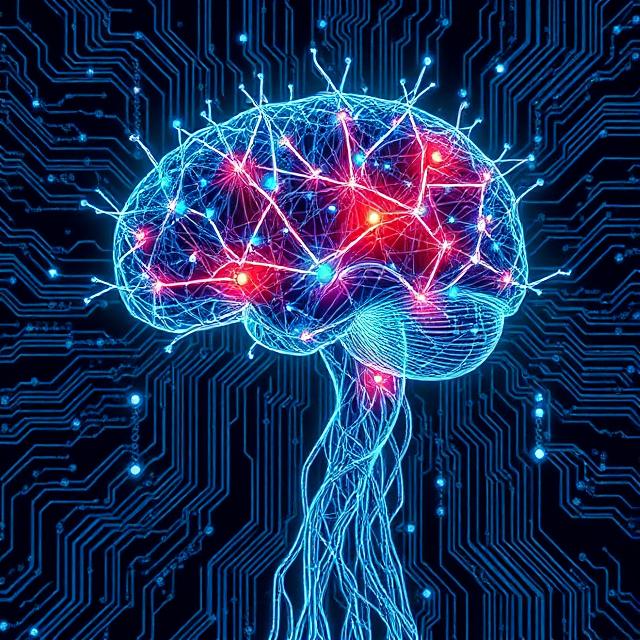
Neuromorphic computing is more than a software upgrade; it is an architectural revolt. It replaces the binary, clock-driven logic of traditional chips with an asynchronous, event-driven design modelled on the human brain.
Whereas the traditional model is a continuous, power-hungry, sequential data transfer between the CPU/GPU and RAM, neuromorphic architecture has the processor and memory co-located in synthetic neurons. It is an event-driven, asynchronous, brain-like “spike”, but only when data changes.
By utilising Spiking Neural Networks (SNNs), neuromorphic chips like Intel’s Loihi reconstruct the fundamental relationship between data and time. First, the memory and processing exist in the same physical space (the synthetic neuron). This way, the Von Neumann bottleneck is eliminated.
Secondly, like the biological human brain, which does not fire all 86 billion neurons simultaneously to read a single sentence, the neuromorphic computing chip is sparse and event-driven. They process information as asynchronous “spikes.” If an input does not change, the chip consumes virtually zero power.
Thirdly, while an LLM query requires a journey to a cloud data centre sucking down megawatts of energy, a neuromorphic chip can execute complex cognitive tasks locally on milliwatts, the power budget of a biological brain.
The Deep and Hard Questions on Redefining Machine Creativity
When we shift the hardware paradigm from a calculator to a brain, we change the very nature of what machine creativity can be. Consequently, the paradigm shift is imminent, raising uncomfortable questions about the relationship between technology, time, and art.
i. Can a machine be truly creative if it cannot experience time?
Human creativity is deeply temporal. Music, rhythm, narrative pacing, and the sudden spark of a realisation are fundamentally bound to the passage of time. Traditional LLMs have no inherent concept of time; they view text as a flat spatial array of tokens.
Neuromorphic SNNs, by contrast, are natively spatiotemporal. Because their spikes are mapped to real-world time delays, they possess an architectural understanding of rhythm, decay, and momentum. Thus, a neuromorphic creative computer doesn’t just output a piece of music based on a prompt; it can jam, shifting its tempo and emotional resonance in real-time response to a human performer.
ii. Is creativity possible without a localised context?
True artistic collaboration requires an intimate, shared environment. Current AI is profoundly alienated; it is a centralised monolith in the cloud, serving millions of users simultaneously with the same brain.
Neuromorphic computing enables Edge Creativity. By compressing immense cognitive power into an ultra-low-power local microchip, the AI can live entirely inside a standalone instrument, a camera, or a sketchpad.
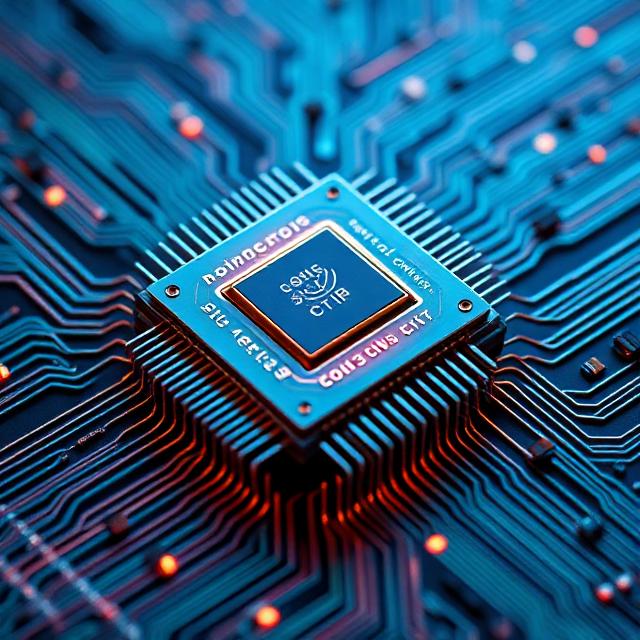
It becomes a localised companion, completely disconnected from the internet, absorbing the specific atmospheric quirks, mistakes, and preferences of its human partner. This presents a decentralised, context-based, and subjective machine intelligence.
iii. Can an entity create without the ability to forget?
Current LLMs are burdened by total recall. They retain vast data bands of human history but cannot organically drift. Neuromorphic systems allow for continuous, plastic learning. Synaptic weights can strengthen or decay naturally based on real-time experience.
This introduces the capacity for machine intuition, the ability to filter out the noise of billions of data points to focus on the immediate, emergent creative spark. At the core of this is memristors and in-memory computing.
A Critical Insight to Shape the Field of Neuromorphic Computing
Current AI development is caught in a dangerous incentive loop. Capital is flowing toward the construction of increasingly massive data centres, reinforcing a centralised infrastructure that is economically and environmentally unsustainable. We are terraforming our energy grids to support inefficient software architectures moving into the future.
The critical pivot we must make at this point is to stop trying to make software smarter by making it bigger. We must make the hardware wiser by making it biological. This is quite a big fete, but one that is attainable given human ingenuity coupled with current AI prowess.
Research funding and academic focus must be aggressively redirected from brute-force transformer scaling toward the co-design of neuromorphic hardware and spiking algorithms. We must stop viewing hardware as a passive container for code, and instead recognise that true intelligence and creativity are emergent properties of the physical medium through which they flow.
The future of machine creativity will not be found in a million-server data centre consuming the energy of a small nation. It will be found in an elegant, localised, and quiet silicon or smarter material chip. In a machine that doesn’t just mimic human thought, but respects the biological efficiency that made thought possible in the first place.