Africa’s Greatest Crisis Is Not Poverty, but the Failure of Public Ethics
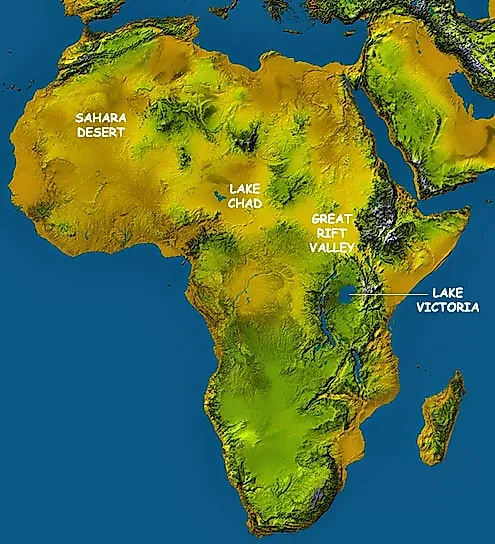
When we mention Africa, the temptation is to begin with the statistics. We want the numbers on poverty rates, unemployment, corruption index, debt levels, democratic rankings, economic growth, et cetera. But are these statistics the real deal? Often, they conceal the deeper reality: the lost moral and institutional capacity of the continent to govern its resources wisely.
Off script for a moment. This article will take on a rather generalist approach. If at any point this seems more like your country, chances are, it is more like mine. So, what’s the point? You will be surprised by the similarities. But there are recommendations too, for the better. Enough.
The intrinsic truth about Africa’s enduring crisis goes beyond the fundamentals of economics. I can summarise it as a crisis of political imagination, institutional weakness, and public ethics.
This is not to deny the immense progress made across parts of the continent. Some African states have demonstrated that peaceful transition of power, economic reforms, institutional resilience, and constitutional governance are possible. However, even those operate way below their potential.
If anything, elections are the one thing Africa struggles with the most. In a brutal sense, it keeps getting it wrong. The ripple effect is deadly. Political competition is often organised around ethnicity and tribal lines rather than ideas. Public office is still regarded by many as a gateway to private wealth. Corruption is not merely tolerated; in some societies it has become normalised. Institutions that should restrain power instead become toys of those who possess it.
The question, therefore, is not why Africa remains poor despite its extraordinary wealth. Yes, Africa is rich. It is about why political communities blessed with abundant natural resources and one of the world’s youngest populations have struggled to construct states that consistently serve the public good.
Disclaimer. This question is not new. It has occupied some of Africa’s greatest thinkers for the longest time. For the right reasons. Nevertheless, the question must continue to be asked until we get it right.
The tragedy of Africa
Frantz Fanon, the political philosopher from Martinique, warned that the tragedy of post-colonial Africa would not merely be the departure of colonial rulers. He worried about the emergence of national elites who inherited colonial institutions without transforming their underlying logic.
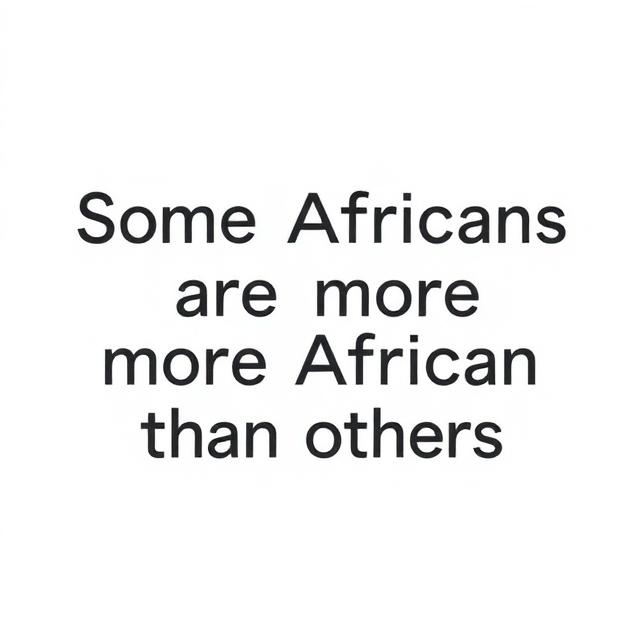
Political independence, he argued, could become little more than a transfer of privilege from foreign rulers to domestic elites. Arguably, post-colonial Africa has remained extractive, only with different beneficiaries. Those more African than the others, loosely borrowing from George Orwell.
Chinua Achebe reached a similarly uncomfortable conclusion in The Trouble with Nigeria, arguing that the problem was simply and squarely about the failure of leadership. This, then, begs a deeper examination of the leadership itself since it does not emerge in isolation.
Leaders are products of political cultures, educational systems, civic expectations, and institutional incentives. A society that celebrates wealth without questioning its origins, rewards loyalty above competence, and mistakes personality for vision inevitably reproduces and propagates poor leadership and its cronies.
Ali Mazrui repeatedly reminded Africa that identity, governance, and development cannot be separated. He pointed out that the continent’s diversity should have become its comparative advantage. Instead, political entrepreneurs have frequently transformed ethnic identity into political capital. We have reduced citizenship to tribal arithmetic and elections to demographic contests rather than contests of ideas.
Perhaps the most enduring lesson comes from Nelson Mandela, whose greatness is tied to the recognition that institutions are more enduring than personalities, besides driving the end of apartheid. States succeed when institutions become stronger than the individuals who temporarily occupy public office. This is Something seemingly absent in most African states. In the leaders’ heads. In their people’s minds. Some of the leaders and some of the people. Perhaps more than sensible.
We must understand that societies decline when constitutions become negotiable, judicial systems become politicised, legislatures become puppets of state capture, and public institutions exist primarily to preserve incumbency.
We can converge in thinking with some of these great African minds on the fact that development is ultimately an institutional and moral achievement before it becomes an economic one.
The American economist Douglass North argued that institutions are the rules of the game. Where those rules are impartial, investment follows, innovation flourishes, and citizens develop trust. Where the rules are manipulated by the powerful, corruption becomes rational, entrepreneurship becomes risky, and public trust gradually disappears. Have a look at the institutional strength in some of the African countries, and you will have answers to the present misery.
In many African countries, corruption is not a case of individual misconduct; it has evolved into an institutional game in which integrity is penalised while patronage is rewarded. This time around, I am tempted to ask you to have a chat with Prof. P.L.O Lumumba.
Ultimately, the institutional crisis in Africa is reinforced by what may be described as a crisis of public reasoning. A good fraction of the African populace has, time and again, failed to evaluate their leaders based on competence, integrity, and policy. Politics is more of a circus. Campaigns have become spectacles of personality. Elections continue to be auction platforms of promises that neither the candidate nor the voter expects to be honoured.
The new normal is the trivialisation of public debates into slogans. Us against them based on banter. Not much touches on the difficult conversations about productivity, industrialisation, education, research, technological innovation, and institutional reform.
The consequences are immediate. Nations endowed with immense mineral wealth continue exporting raw materials while importing finished products. Tragedy. Young graduates seek opportunities abroad because domestic institutions fail to reward merit. Disaster. Public debt rises even as public services stagnate. Calamity. Governments announce ambitious development plans while neglecting the institutional foundations required to realise them. Catastrophe.
Enyewe, wajinga ni sisi “For sure, we are the fools” metaphorically. We have accepted this and resorted to the concept of give time, time. Someday, we will have a seat at the table. The irony is that when that time comes, even those who spew hope, unless they are strong enough, become manipulated.
So, are we saying that all is lost? Do we sound like intellectual pessimists void of any bit of optimism?
There is Hope
Well, history offers little evidence that nations are permanently condemned by their circumstances. That is the hope. South Korea emerged from war to become a technological powerhouse. Singapore transformed itself despite possessing almost no natural resources. Rwanda, despite its unique historical context, has demonstrated that institutions can be rebuilt after catastrophic national failure. Botswana has shown that prudent management of natural resources is possible in Africa. These contextual examples are a reminder that institutions do shape national outcomes.

Africa’s greatest comparative advantage remains its people: the human capital. Nearly 60% of the continent’s population is under the age of twenty-five. Depending on what the people decide through their leadership, this demographic can become a great dividend or an immense liability. Human capital develops through deliberate steps to improve society.
There is a need for investment in education, scientific research, dependable healthcare, thriving entrepreneurship, digital infrastructure, and most importantly, respect for the rule of law. The twenty-first century will reward societies that generate ideas more than those that merely extract minerals.
On education, Africa needs to rethink its approach. We must actively seek to have citizens capable of critical reasoning, not just degrees and certificates. Universities must develop inquiry and offer education that cultivates ethical judgment, civic responsibility, scientific curiosity, and intellectual independence. Democracies survive only when citizens possess the capacity to distinguish persuasion from manipulation, evidence from propaganda, and leadership from populism.
Equally, citizens cannot continue to outsource responsibility entirely to political elites. Democracy is not sustained once every election cycle. Citizens must continually insist upon accountability day in, day out. They must reject political violence, refuse the normalisation of corruption, and defend institutions even when doing so inconveniences their preferred leaders. The quality of our governance is proportional to the ills we are willing to tolerate.
This editorial is therefore not an indictment of Africa but an appeal to its conscience.
To political leaders, the message is clear. History will not remember how effectively you accumulated power. It will remember whether you restrained it. It will remember whether you strengthened institutions or weakened them. Whether you protected public resources or looted them. Whether you tolerated violence or upheld justice. Whether you governed for posterity or merely for political survival. Remember, public office is a constitutional trust, not a private inheritance.
To Africa’s citizens, especially the youth, the responsibility is equally profound. Reject the politics of patronage. Demand competence over charisma. Look at institutionalism over personalities. Choose service over slogans. Ask for accountability over blind loyalty. Refuse to measure leadership by ethnicity, wealth, or political theatrics. Democracies mature when citizens mature before politicians do.
The future of Africa will not be decided by what lies beneath the ground. The minerals themselves hold no economic liberalisation power, unless we know what to do with them. The power is in the classrooms, courtrooms, laboratories, legislative assemblies, boardrooms, newsrooms, and polling stations. The resources are already there; what we need is institutions worthy of those resources and citizens determined to defend them.
Africa’s renaissance will begin when public ethics becomes the foundation upon which we build our patriotism, leadership integrity and national purpose. Once that is done, the immense wealth our motherland possesses will cease to be a curse, one to greedily fight for and become an inheritance enjoyed by all the people. All of us.
At the end of it all, it boils down to us. We have the power to be the change and bring the change.