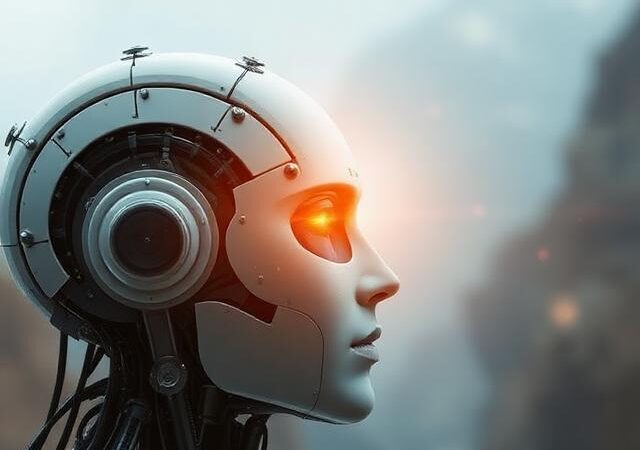
Africa Cannot Afford to Be a Passenger in the AI Revolution.

Editorial Piece
Artificial intelligence (AI) is moving from being a fascinating technology we read about to becoming the infrastructure that will increasingly determine how we work, learn, trade and govern. It is a quietly uncomfortable reality.
The worry is that Africa may be watching. Passively.
Not entirely from the sidelines, of course. There are brilliant minds, African developers, researchers, entrepreneurs and institutions doing remarkable work with AI. But the bigger question is whether the continent will continue being a consumer of intelligence built elsewhere, or become an active participant in designing the intelligence that shapes its future. This is especially crucial.
For decades, Africa’s development story has revolved around importing solutions. We import technology, expertise, machinery and sometimes even policy ideas, then adapt them to local circumstances. This is not inherently wrong; learning from the rest of the world is not bad. The danger comes when adaptation becomes permanent dependence.
Unfortunately, this AI development could make that dependence considerably deeper.
Imagine a Kenyan school system relying on educational models trained primarily on experiences outside Africa. What of farmers receiving agricultural recommendations based on datasets that barely understand our soils, weather patterns or local markets? Not to talk of public institutions adopting automated decision-making systems whose assumptions nobody locally can interrogate because of a lack of capacity.
Of course, the technology may work. But whose reality is it working from? Ours or someone else’s.
This is why Africa’s AI conversation cannot be reduced to how many people have access to AI tools or how many businesses are experimenting with automation. The real conversation is about capacity.
Our universities must produce researchers who can build and interrogate advanced systems. We need reliable electricity and digital infrastructure, relevant datasets governed responsibly, and businesses capable of turning African problems into African technological opportunities.
Most importantly, we need policymakers who understand that technological sovereignty does not mean isolation. It means possessing enough knowledge and capability to make meaningful choices.
Reality check: the human dimension that we cannot ignore.

Technology should not become our excuse to leave millions of young Africans behind. If automation changes the nature of employment, education must change with it. The question should not simply be, “Which jobs will AI replace?” It should also be, “Which new capabilities will our people need?” or “Which opportunities are created?”
But we must be prepared long before the disruption arrives.
Africa as a continent has an unusual opportunity here. We are not carrying the same industrial baggage as many older economies. We can leapfrog in some areas, just as mobile technology allowed large parts of the continent to move rapidly beyond traditional banking infrastructure.
To succeed on this. It requires deliberate investment, experimentation and patience. Unfortunately, the AI revolution will not wait for us to become ready.
So, the time for another African technology strategy that ends as a document on a shelf is over. Our governments must fund digital infrastructure and research. Our universities must prioritise AI skills and locally relevant research. Businesses must invest in African talent rather than simply importing finished systems. And citizens must demand transparency over how automated systems are used to make decisions that affect their lives.
This is not a call to reject foreign technology. It is a call to stop treating African participation as optional.
The future is being coded somewhere. Africa must insist on being in the room where that future is designed. Actually, on the table.
The choice is now. Either we build capacity, shape the technology and set the rules or accept whatever others build for us.
The machines are arriving. Our response cannot be to watch. It must be to build.