No Systems, No Scale; It’s That Simple

Most entrepreneurs don’t think about systems in the early days of a business. At that point, momentum often matters more than method; founders move fast, decisions are instinctive, and progress is measured in small wins rather than structured processes.
Early on, systems feel like unnecessary bureaucracy and something for bigger companies with more time, more people, and more stability.
But with time, growth creeps in and changes the equation. What once felt like agility begins to look more like chaos, and the absence of systems slowly becomes one of the most expensive problems a business can have.
The resistance to systems
Entrepreneurs resist systems for understandable reasons. Firstly, systems take time to design, document, and maintain. Secondly, for a startup, they can feel rigid in an environment where flexibility is a survival trait. Thirdly, early hires might see them as constraints, and founders may worry they’ll slow innovation or dilute the culture of ownership.
There’s also a psychological barrier that cultivates the fear that building systems will force clarity. It requires defining how things should be done, which can expose inconsistencies, inefficiencies, or even gaps in leadership thinking. It’s easier, in the short term, to keep things informal.
But that short-term convenience compounds into long-term cost.
The hidden cost of not having systems
When a business grows without systems, the cracks don’t appear all at once; they emerge slowly, then accelerate.
Communication becomes inconsistent. For instance, two customers receive different experiences because two team members handled the same situation differently. Sales processes vary from one rep to another, making performance hard to measure and improve. Onboarding new employees becomes a guessing game, dependent on who trains them rather than a clear standard.
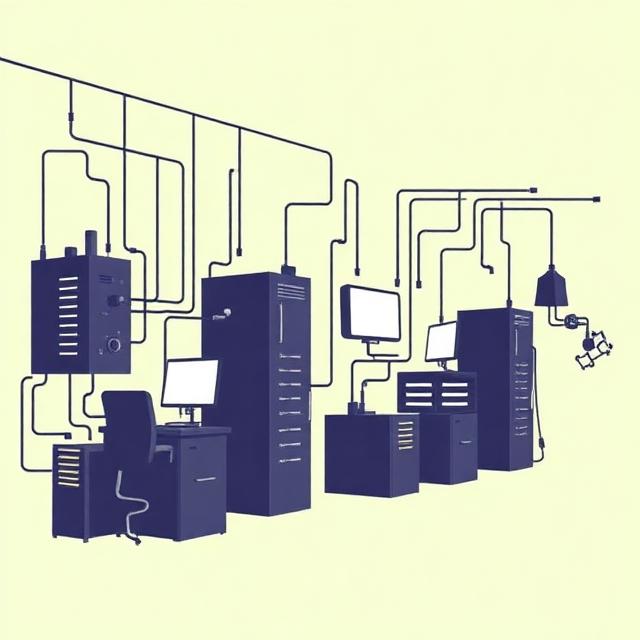
Also, decision-making bottlenecks form around founders or key individuals. Without defined processes, everything routes through the same few people, slowing the business and increasing burnout. Growth, instead of being exciting, becomes overwhelming.
Perhaps most costly is the loss of scalability. Without systems, every new hire adds complexity rather than capacity. The business grows in headcount but not in efficiency. Margins shrink, mistakes increase, and customer trust can erode.
At this point, not having systems becomes actively expensive.
Why systems feel costly to build
Despite their importance, systems are undeniably hard to implement, especially in a growing business.
First, they require time that feels unavailable, especially at the very beginning of a business when revenue, customers, and team demands are all increasing. Stepping back to document processes can feel like a luxury.
Second, they demand iteration. The first version of any system is rarely perfect. It must be tested, refined, and sometimes rebuilt entirely. This can feel like wasted effort, especially for founders used to immediate results.
Third, systems introduce accountability. Once a process is defined, it becomes visible when it’s not followed or when it fails. That visibility can be uncomfortable, particularly in cultures that have relied on informal trust.
Finally, there’s the challenge of adoption. A system only works if people use it. That means training, reinforcement, and sometimes difficult conversations when team members resist change.
The turning point: from effort to leverage
The paradox is that while systems are hard to create, they eventually reduce effort everywhere else.
A well-designed onboarding system turns weeks of inconsistent training into a repeatable, reliable experience. A clear sales process improves conversion rates and makes forecasting more accurate. Documented operations reduce errors and free up leadership time for strategic thinking.
Systems shift a business from being reactive to proactive. Instead of constantly solving the same problems, teams can focus on improving the system itself. And this promotes dependability on the processes.
This is where leverage emerges. One decision, embedded into a system, influences outcomes repeatedly without requiring constant attention.

Systems as a growth multiplier
In a growing business, systems are not just about efficiency; they’re about enabling scale without losing quality.
They create consistency, which builds trust with customers. They allow delegation, which empowers teams and reduces founder or top leadership dependency. They also provide data, which improves decision-making.
Importantly, systems also protect culture. When values and expectations are embedded into processes, they’re less likely to erode as the team expands. New hirers adapt quickly, given that processes are in place. Without systems, culture becomes diluted by inconsistency.
Finding the balance
The goal should never be to systematise everything too early. Over-engineering can be just as harmful as having no structure at all. It should be about timing and prioritisation.
The focus should begin with areas where inconsistency is already causing pain and havoc. For instance, if there are issues with customer experience, revenue generation, or team onboarding, start there. Build simple, flexible systems that can evolve with the business rather than rigid frameworks that stifle it.
Begin to think of systems as enablers, not as constraints. They should make the right way the easy way.
The real cost
In the end, systems carry two kinds of cost: the upfront investment of time and effort, and the ongoing cost of not having them.
The first is visible and immediate, which is why it’s often avoided from the onset. The second is hidden and compounds, which is why it’s often underestimated.
For growing businesses, the choice isn’t whether to build systems or not. It is a matter of when. Build them early, and you pay in effort. Delay them, and you pay in inefficiency, missed opportunities, and stalled growth.
The facts are clear. Yes, systems are hard to have, but far more costly not to.