History: A Record of What Was, or a Glimpse of What May Be?
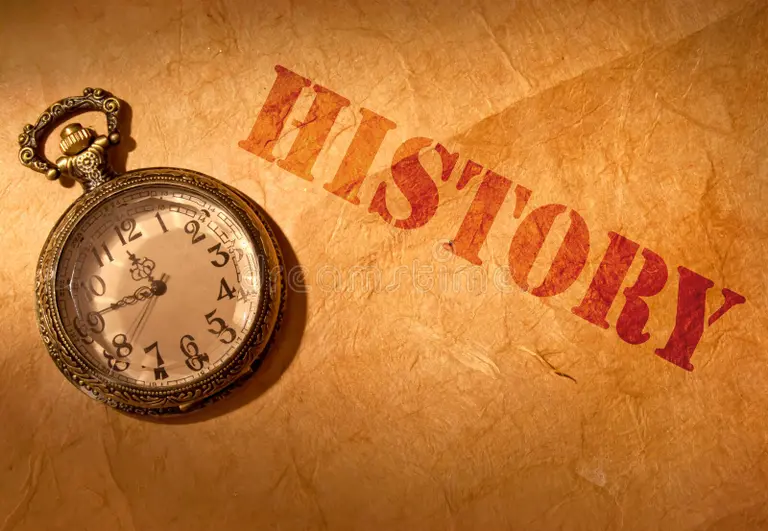
History is often described as the study of the past, indicating somehow that time is a vast archive into which humanity deposits its memories. We read of wars, discoveries, revolutions, epidemics, empires, failures and triumphs in a way that depicts history as just hoarding past events. But history, I believe, is more than an inventory of what has already happened.
Its deeper purpose is to ask what the past means to those who inherit it. It ceases being a philosophy when we stop merely asking what happened and begin asking why it happened, what it changed, and what it requires of us now.
Rarely does the past repeat itself with mechanical, clockwise precision. Circumstances change, and with them change the possibilities available to human beings. The same pressures can produce entirely different outcomes in different ages. This is both the limitation and the fascination of historical knowledge. History gives us patterns, but seldom guarantees recurrence.
History and the Computer Age
The arrival of the computer illustrates the point. For much of human history, intellectual and industrial development remained constrained by the speed and capacity of the human mind and body. With the advent of the computer, that relationship was altered.
Computers did not simply provide a faster calculating machine; they changed what society could conceive as possible. Information could be stored, processed and transmitted at unprecedented scale. Then came the internet, smartphones, automation and artificial intelligence. Each development did more than extend the previous one. Each altered the environment in which the next development became possible.
No historical analogy could have predicted the precise trajectory of this transformation. Perhaps at some point it was never thought possible, let alone comprehensible. The steam engine could illuminate something about technological disruption, the industrial revolution could postulate about the social consequences of mechanisation, but neither could tell us exactly what would happen when intelligence itself became partially reproducible through machines.
The dawn of artificial intelligence, for instance, shifted circumstances so profoundly that history’s predictive power weakened. This does not make history irrelevant, though. It quite does the opposite.
Epidemic Outbreaks
Consider disease. Human beings have repeatedly encountered epidemics, and although pathogens evolve, the social dilemmas surrounding them possess remarkable continuity. Who should be protected first? How should uncertainty be communicated? When does individual liberty yield to collective safety? How does fear alter behaviour? What happens when scientific advice collides with political interests, economic necessity or public distrust?
By considering what happened most recently with the global outbreak of COVID-19, some of the questions raised were also presumably pertinent during the 1918 Spanish Flu. Thus, whereas past epidemics cannot tell us exactly how a future outbreak will behave, they can reveal the consequences of delay, denial, poor communication and institutional weakness.

These revelations can also demonstrate the value of surveillance, cooperation, medical innovation and public trust. Of course, history is rarely a crystal ball and more often a laboratory of human experience.
This becomes particularly important as we consider how dramatically humanity itself has changed. Science has transformed our understanding of the universe, disease and our own biology. Political systems have evolved, sometimes toward greater participation and sometimes toward more sophisticated forms of control. Technology has compressed distance and accelerated communication. Development has lifted millions from conditions once considered permanent, and today, human beings possess knowledge that would have seemed miraculous to earlier generations.
History and Human Sophistication
Unfortunately, sophistication does not necessarily mean wisdom. The human being who commands artificial intelligence may still be driven by fear, vanity, loyalty, greed, love and the desire for recognition. Maybe not just recognition, but ultimate recognition.
One can sequence a genome while misunderstanding their neighbour. A very intelligent person can place machines on Mars while remaining remarkably primitive in their political arguments. More paradoxically, we can communicate instantly across continents and still fail to communicate with the person sitting beside us.
This is where history becomes a study of character as much as circumstance. Yes, institutions change, technologies change, borders change, but the human capacity for cooperation and conflict persists. Every age imagines itself unusually modern, but is ‘coaxed’ by default to inherit the same old questions.
Think for a moment: Who belongs? Who decides? Who benefits? What are we willing to sacrifice for security, prosperity or freedom? What obligations do we owe to strangers, to future generations and to those whose voices are absent? This is just a snippet of how the more we think things change, superficially or in sophistication, the more they remain the same.
Some word of caution here, though. It is not a claim that nothing changes. Everything changes. The point is to recognise that beneath changing circumstances lie persistent human relationships and desires.
In a Nutshell
History therefore has a double value. It teaches us about difference in how profoundly circumstances can alter the course of events and also continuity in how stubbornly certain aspects of human nature endure. History’s ultimate wisdom lies in holding these truths together.
Maybe we think we can predict the future; perhaps it will undoubtedly surprise us. Most likely, I believe. Artificial intelligence may transform work, politics, education and even our conception of intelligence itself. Scientific discoveries may overturn assumptions we currently regard as settled. Most assuredly, some events will emerge from circumstances for which no historical precedent exists.
But when the future arrives, we will still have to decide what to do with what we could have created. That is why history matters: because despite not telling us exactly what will happen, it can make us more intelligent about uncertainty.
Let us remember that today’s assumptions are temporary, that yesterday’s certainties may have been mistaken, and that outcomes depend upon choices made within circumstances that are never quite the same twice.
History is therefore neither merely memory nor prophecy. It is a conversation between time and human judgement. It is about the past speaking to the present, and the present deciding what kind of past it will leave behind. And as for the future, it is just preparing us for how to deal with uncertainty.