Just do it; Either way, you succeed, or you learn
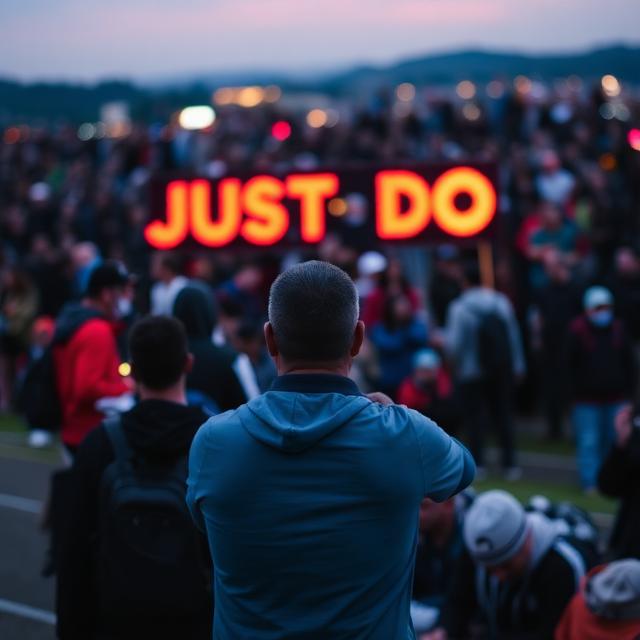
“Just do it” are words synonymous with the giant brand Nike. Beneath those words is more than just a slogan; it is a way of life that dictates progress or slackness. It is a quiet nudge toward action. And over time, I have come to realise that action, whether simple, imperfect, or even hesitant, is where most people stumble.
People slack not because they lack ideas, but because they struggle to begin.
I did not arrive at this conclusion from books or seminars, but from ordinary conversations I hold with people in unlikely places. Sometimes it is in buses, waiting rooms, office corridors, cafés, and on long walks.
In fact, it is surprising how easily people open up when the setting is neutral and the expectations are low. In these spaces, ideas flow freely. Someone wants to start a business. Another dreams of writing. Someone else has an innovation they are convinced could solve a real problem. The ideas are not usually the issue. On the contrary, they are abundant and almost overflowing.
The real challenge lies in pressing the start button.
At first, I thought this hesitation was simply laziness. It seemed like the most obvious explanation. But the more I listen, the more I realise it runs deeper than that. There is a quiet weight people carry that is not always visible but is deeply felt.
Fear of failure
Come to think of it, the fear of failure, for instance, is the most obvious layer. It shows up in statements like, “What if it doesn’t work?” or “What if I am wasting my time?” However, beneath that is something more personal, like self-doubt. A lingering question is always, “Am I really capable?” “Can I pull through?”
I have felt this myself more times than I care to admit. Honestly. Even if I may not look like it at times.
Truthfully, though, there have been moments when I stood on the edge of starting something meaningful, only to retreat into comfort. Not because I lacked clarity, but because I questioned my readiness. I told myself I needed more time, more preparation, more certainty. In hindsight, those were convenient excuses dressed as logic. However, the truth was simpler; I was unsure of myself.

Fear of the unknown also plays its role. Starting something new means stepping into unknown territories without guarantees. It means accepting that you may not have all the answers. For many of us, especially those raised in environments where stability is valued over risk, this feels unsettling. We are taught, sometimes subtly, to choose the safest path, the one with predictable outcomes. Yet, ironically, that same path often leads to stagnation.
Then there is the fear of ridicule. This one is quieter but just as powerful. It is the imagined laughter, the anticipated criticism, the concern about what others might say if things do not go as planned. In some communities, this fear is amplified by close social circles where everyone knows everyone. In others, it is shaped by a culture of comparison and constant visibility. Either way, it becomes a barrier.
Listening to the Engage Talk by Martin Oduor can make this sink deeper. However, his words, “life can rise again”, provide a compass towards how to address the fear of ridicule.
Let me ask, how many people have you heard speaking of the fear of success? Just a few. Well, we like to think that success might intimidate us, but in reality, most of us are not held back by the idea of doing well. We are held back by the possibility of not doing well and being seen in that state.
Over time, my perspective has been shifting. I always question hesitation, but not just in others, but in myself, too. What exactly are we protecting when we choose not to start? Is it our time? Our reputation? Our sense of self? And more importantly, what do we lose in the process?
These answers can only become clearer with experience.
Just do it
Every time I choose action over hesitation, something shifts. Not always externally, but internally. I gain clarity. I learn something new. I discover strengths I did not know I had, and weaknesses I can work on. Even when things do not go as planned, there is a sense of movement. Progress, in its simplest form.
On the other hand, every time I choose inaction, there is a different outcome. A lingering “what if.” The discomfort is quiet. The idea does not disappear; it stays, sometimes resurfacing later, unchanged but heavier. I don’t know if you notice the strangeness in carrying an idea you never gave a chance.
This is where the phrase, entrenched in our title today, begins to take on a deeper meaning: either way, you succeed, or you learn.
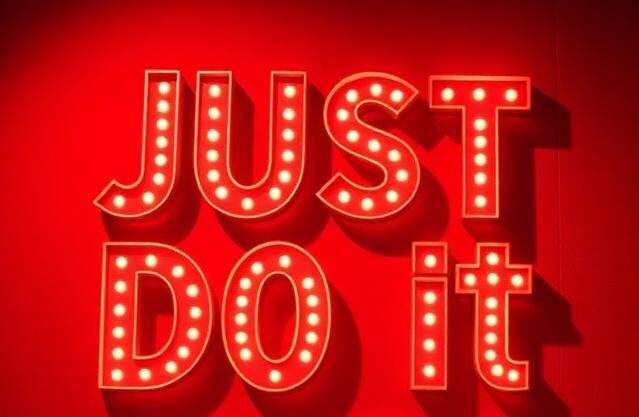
Success, in this context, is not limited to the conventional definition. It is not always about achieving the intended outcome. Sometimes, success is simply the act of starting. It is showing up for your own idea, giving it form, testing its validity.
Learning, on the other hand, is the natural companion of action. It is what you gain when things do not go as expected. And in many cases, it is more valuable than the initial idea itself. I have come to see learning not as a consolation prize, but as an outcome in its own right.
Different Environments Shape us differently
There is also something worth saying about how different environments shape this mindset. In some settings, there is a strong emphasis on resilience. That is, on trying again despite setbacks. In others, there is a structured approach to risk, where failure is analysed and used as a stepping stone.
When these perspectives meet, they create a balanced view that encourages boldness and also reflection. And this balance is important.
Blind action without thought can lead to unnecessary mistakes. But overthinking without action leads nowhere as well. The space in between, where you think enough to begin, and begin early enough to learn, is where growth happens. It is the biting point of not stalling.
If I am honest, I still struggle with this at times. There are days when I hesitate and feel more comfortable than taking action. Other times, the risks seem larger than the potential rewards. All in all, I have learned to recognise those moments not as signals to stop, but rather invitations to move anyway.

Starting does not require perfect conditions. It rarely happens that way. More often, it begins with small steps such as testing an idea, sharing a thought, or taking a risk that feels slightly uncomfortable. These steps may not seem significant at the time, but they create momentum. And momentum, once built, becomes easier to sustain.
Looking Back
Looking back, some of the most meaningful shifts in my life did not come from big decisions, but from simple beginnings. Just doing it. A conversation that turned into an opportunity. A small project that grew into something larger. A moment of courage that led to unexpected growth. None of these would have happened if I had waited for certainty.
So, when I hear someone speak about an idea they have been holding onto, I no longer focus on refining the idea. Instead, I ask the simplest question: what is the smallest step you can take today?
Because in the end, that is what “just do it” really asks of us. No perfection. No certainty. Just movement, even if it means crawling, as Martin Luther King Jr spewed forth.
In that movement, however little, something immense happens. You either succeed or you learn. And both, in their own way, move you forward. And that is the most important thing. Just do it.